// case study · our own product
CityChat
A city guide you talk to. Our own product: designed, built, shipped and run by the same team.
// the problem
Guidebooks don’t
answer questions
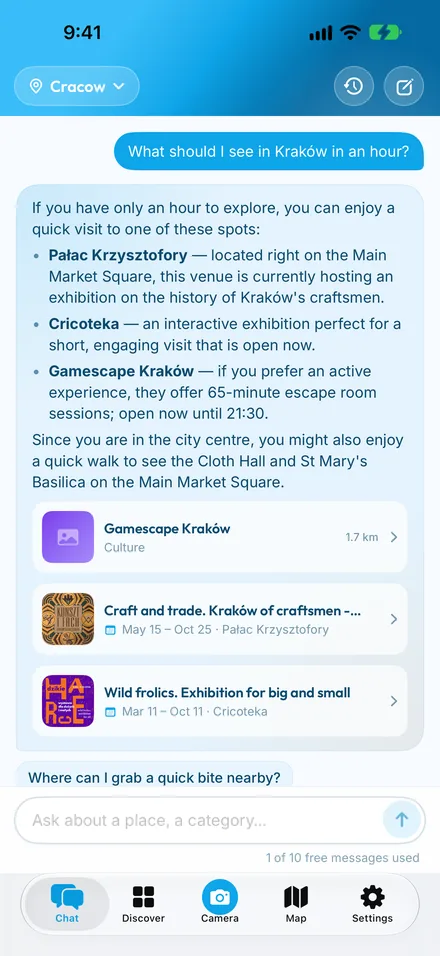
People in a city they do not know want to ask a question and get an answer they can act on: what is worth seeing tonight, where to eat near here, what this building is. Lists and reviews leave that work to them.
A language model will answer anything, including with places that do not exist. So the real problem was never the chat. It was making the chat answer only from places we can stand behind, in the user’s language, fast enough for a phone.
// what we built
One team,
the whole product
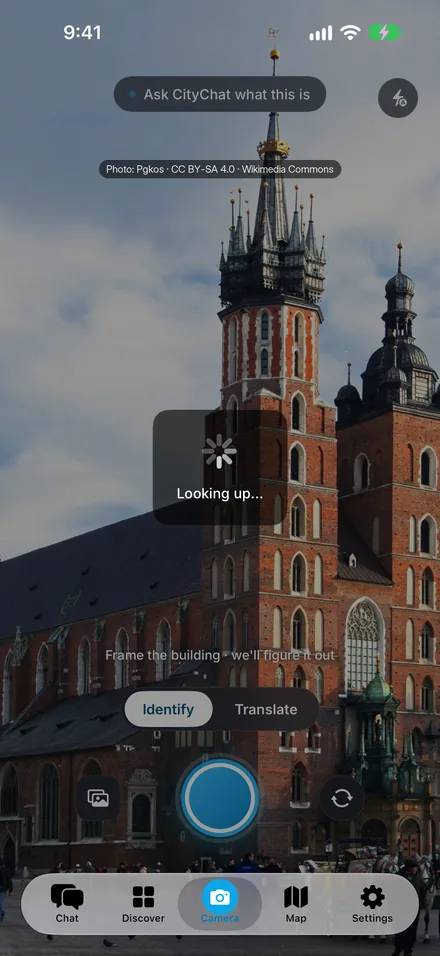
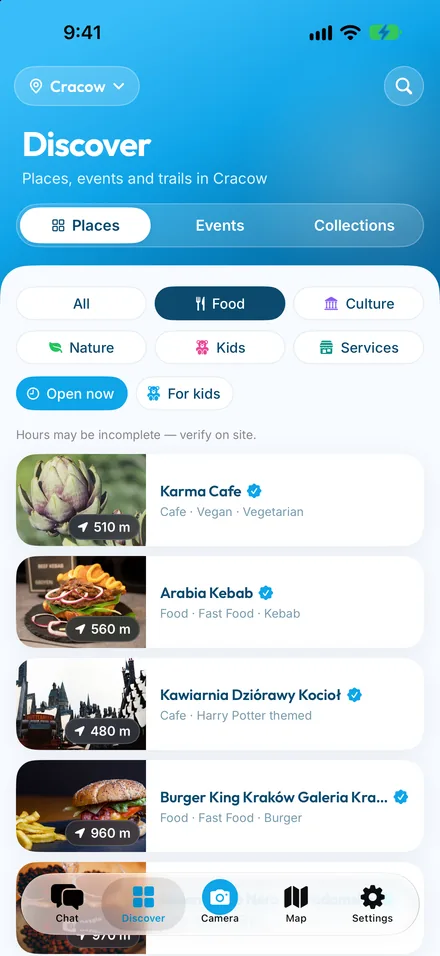
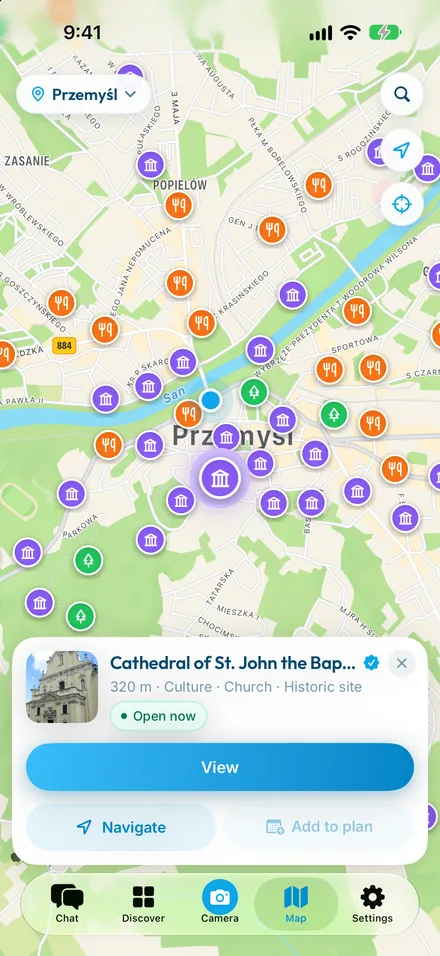
- Native apps for iOS and Android. Chat, a camera that tells the story of the building in front of you or reads a menu or a sign in your language, Discover, and a map made for walking.
- A Go backend with geospatial and vector search over the catalogue.
- Chat grounded in the catalogue. Every place an answer names has to be one the model was given. A second model at a different provider stands by as the fallback.
- A portal for local businesses. Venues manage their own listing and can put a QR code or an NFC tag at the door that opens their page in the app.
- Whole cities offline for subscribers.
- Data tooling that checks the catalogue against the web and writes only what it can prove.
// the stack
How it is built
Native iOS and Android apps. A Go backend with geospatial and vector search. LLM chat with a fallback model at a second provider. The admin and business portals, the website and the data tools live in the same repository as the apps and the backend.
A merge to the main branch deploys to staging on its own. Production is a separate, deliberate step.
// the numbers
What can be counted
// what was hard
Where it
pushed back
- A model that invents places. The test suite fails any answer that names a place the model was not given. One model we had configured as the fallback cited invented place ids in 9 of 420 replies; it is no longer in the chain.
- Polish. Most conversations are in Polish. The successor a provider suggested for our chat model made about 22 language errors per 80 replies, against about 4 for the model then in production. We measured for two days before changing anything, and on the second day the answer changed.
- Data that goes stale. Restaurants close and opening hours change. Research agents propose the corrections, but every opening time, dish and price is fetched again, raw, and has to appear in the source word for word before it is written.
- Our own measuring. The test harness favoured the model we already had: its language check had been built on that model’s replies. The failures that hinged on it were scored again with a stricter check.
// read more
The long versions
Three articles by Paweł Rojek go into the detail:
// get in touch
Have a problem that
needs shipping?
kontakt@appliedai.dev
We read everything. Serious problems get a reply from an engineer, not a funnel.